
• Used as Lung Medicine for 2,000 Years. Then Rockefeller-Funded Medicine Erased It in One Decade.
    3,942 views Apr 30, 2026 #respiratoryhealth #forgottenmedicine #flexnerreport

    In the winter of 1882, a 22-year-old woman named Margaret Sullivan was admitted to the Trudeau Sanatorium in Saranac Lake, New York. She was coughing blood. Her lungs were filling with the bacterial infection that was killing one in seven Americans every year. The doctors had no antibiotics. Streptomycin would not be discovered for another 62 years.

    What they had was a tea brewed from the dried leaves and yellow flowers of a tall, fuzzy plant that grew along every roadside in upstate New York. The Trudeau staff harvested it themselves. They steeped it three times a day and gave it to patients to soothe inflamed bronchial tissue and help them clear bloody mucus from their lungs.

    Margaret Sullivan walked out of that sanatorium in the spring of 1884 and lived another 47 years.

    The plant that helped her breathe still grows along American roadsides today. Hippocrates prescribed it 2,400 years ago. Dioscorides catalogued it in the 1st century AD. Nicholas Culpeper recommended it for every respiratory ailment in 1653. The Cherokee, Mohegan, Menominee, Penobscot, Navajo, and Coast Salish all used it. The U.S. Pharmacopoeia listed it as an official medicine.

    In 1910, the Flexner Report rewrote American medical education. Schools that taught herbal medicine were closed or defunded. The Carnegie Foundation and the Rockefeller Foundation, whose Standard Oil holdings produced the petroleum derivatives used to synthesize the new drugs, bankrolled the survivors. The plant was removed from the Pharmacopoeia. American doctors stopped learning about it.

    In 1966, Allen and Hanburys synthesized albuterol. The FDA approved it in 1981. Today the global bronchodilator market is worth 92 billion dollars. A single Ventolin inhaler retails for between 50 and 80 dollars. The plant that does the same expectorant work mechanically grows free in the ditch outside your driveway.

    Modern research confirms what the sanatorium doctors observed. A 2010 study at the University of Naples Federico II showed that verbascoside, the active compound in mullein flowers, reduces inflammation through the same biochemical pathway that corticosteroid inhalers target. A 2019 Spanish study at the University of Salamanca demonstrated airway relaxation in tracheal tissue at the same physical level albuterol produces. A 2021 Iranian clinical trial showed mullein syrup reduced persistent cough in children by 60 percent compared to placebo.

    The German Commission E officially approved mullein for respiratory catarrh in 1990. The FDA has never issued any equivalent recognition. In the United States, mullein is classified as a dietary supplement. Producers cannot legally make any medical claim. The medicine is still there. It is free for the cutting.

    This is the story of mullein. The Lungwort. The Quaker's Rouge. The Aaron's Rod. The plant that helped humanity breathe for 2,400 years, growing on every roadside in the country that has forgotten its name.
    https://www.youtube.com/watch?v=oMEoa6PYcbg
    Used as Lung Medicine for 2,000 Years. Then Rockefeller-Funded Medicine Erased It in One Decade. 3,942 views Apr 30, 2026 #respiratoryhealth #forgottenmedicine #flexnerreport In the winter of 1882, a 22-year-old woman named Margaret Sullivan was admitted to the Trudeau Sanatorium in Saranac Lake, New York. She was coughing blood. Her lungs were filling with the bacterial infection that was killing one in seven Americans every year. The doctors had no antibiotics. Streptomycin would not be discovered for another 62 years. What they had was a tea brewed from the dried leaves and yellow flowers of a tall, fuzzy plant that grew along every roadside in upstate New York. The Trudeau staff harvested it themselves. They steeped it three times a day and gave it to patients to soothe inflamed bronchial tissue and help them clear bloody mucus from their lungs. Margaret Sullivan walked out of that sanatorium in the spring of 1884 and lived another 47 years. The plant that helped her breathe still grows along American roadsides today. Hippocrates prescribed it 2,400 years ago. Dioscorides catalogued it in the 1st century AD. Nicholas Culpeper recommended it for every respiratory ailment in 1653. The Cherokee, Mohegan, Menominee, Penobscot, Navajo, and Coast Salish all used it. The U.S. Pharmacopoeia listed it as an official medicine. In 1910, the Flexner Report rewrote American medical education. Schools that taught herbal medicine were closed or defunded. The Carnegie Foundation and the Rockefeller Foundation, whose Standard Oil holdings produced the petroleum derivatives used to synthesize the new drugs, bankrolled the survivors. The plant was removed from the Pharmacopoeia. American doctors stopped learning about it. In 1966, Allen and Hanburys synthesized albuterol. The FDA approved it in 1981. Today the global bronchodilator market is worth 92 billion dollars. A single Ventolin inhaler retails for between 50 and 80 dollars. The plant that does the same expectorant work mechanically grows free in the ditch outside your driveway. Modern research confirms what the sanatorium doctors observed. A 2010 study at the University of Naples Federico II showed that verbascoside, the active compound in mullein flowers, reduces inflammation through the same biochemical pathway that corticosteroid inhalers target. A 2019 Spanish study at the University of Salamanca demonstrated airway relaxation in tracheal tissue at the same physical level albuterol produces. A 2021 Iranian clinical trial showed mullein syrup reduced persistent cough in children by 60 percent compared to placebo. The German Commission E officially approved mullein for respiratory catarrh in 1990. The FDA has never issued any equivalent recognition. In the United States, mullein is classified as a dietary supplement. Producers cannot legally make any medical claim. The medicine is still there. It is free for the cutting. This is the story of mullein. The Lungwort. The Quaker's Rouge. The Aaron's Rod. The plant that helped humanity breathe for 2,400 years, growing on every roadside in the country that has forgotten its name. https://www.youtube.com/watch?v=oMEoa6PYcbg
    0 Comments 1 Shares 826 Views 0 Reviews
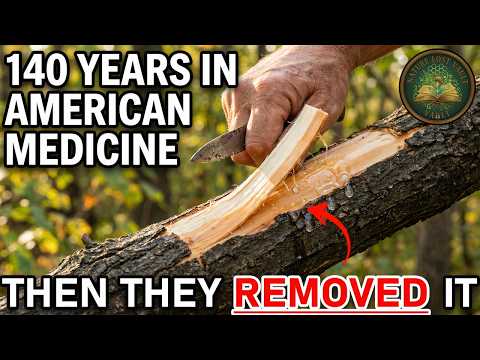
  • The Survival Medicine That Healed Armies. Now Corporate Greed Is Killing the Last Trees.
    1,405 views Apr 8, 2026 #homesteading #forgottenmedicine #foraging

    For 12 days during the winter of 1777, some of George Washington's soldiers at Valley Forge survived on porridge made from the bark of a tree. That same bark was listed in the United States Pharmacopeia for 140 years. It healed gunshot wounds in the Civil War, soothed the digestive systems of millions on the American frontier, and today sits in the throat lozenges in every pharmacy in the country.

    In 1960, it was quietly removed from official medicine. The stated reason: lack of double-blind clinical trial data. The unstated reality: you cannot patent a tree. No pharmaceutical company was going to fund the research required to get it relisted when they could not own the result.

    What followed is a pattern this channel has traced again and again. The knowledge was taken from Indigenous peoples without credit. The tree was stripped bare to supply an industry. And when the profit was gone, the industry walked away. Today, Forest Service botanists are finding hundreds of stripped and dying trees in the Daniel Boone National Forest. Bark poachers are killing a dozen trees for every 50-pound sack they sell. One of America's most respected herbal companies stopped using this plant entirely because the wild supply had been damaged beyond repair.

    Modern research confirms what the Cherokee, Iroquois, and Ojibwe knew for thousands of years. The mucilage in this bark coats and protects every inflamed surface it touches, from throat to stomach lining to gut wall. In vitro studies show it reduces inflammatory damage in colon tissue from ulcerative colitis patients. A 2008 clinical pilot found measurable improvement in IBS symptoms after eight weeks. The FDA itself approves it today as a demulcent for sore throats. The same tissue it soothes in your throat lines your entire digestive tract.

    You can still grow this tree. You can still harvest it sustainably. The knowledge was never lost. It was just taken from view.
    https://www.youtube.com/watch?v=zBLdKOS_ihA
    The Survival Medicine That Healed Armies. Now Corporate Greed Is Killing the Last Trees. 1,405 views Apr 8, 2026 #homesteading #forgottenmedicine #foraging For 12 days during the winter of 1777, some of George Washington's soldiers at Valley Forge survived on porridge made from the bark of a tree. That same bark was listed in the United States Pharmacopeia for 140 years. It healed gunshot wounds in the Civil War, soothed the digestive systems of millions on the American frontier, and today sits in the throat lozenges in every pharmacy in the country. In 1960, it was quietly removed from official medicine. The stated reason: lack of double-blind clinical trial data. The unstated reality: you cannot patent a tree. No pharmaceutical company was going to fund the research required to get it relisted when they could not own the result. What followed is a pattern this channel has traced again and again. The knowledge was taken from Indigenous peoples without credit. The tree was stripped bare to supply an industry. And when the profit was gone, the industry walked away. Today, Forest Service botanists are finding hundreds of stripped and dying trees in the Daniel Boone National Forest. Bark poachers are killing a dozen trees for every 50-pound sack they sell. One of America's most respected herbal companies stopped using this plant entirely because the wild supply had been damaged beyond repair. Modern research confirms what the Cherokee, Iroquois, and Ojibwe knew for thousands of years. The mucilage in this bark coats and protects every inflamed surface it touches, from throat to stomach lining to gut wall. In vitro studies show it reduces inflammatory damage in colon tissue from ulcerative colitis patients. A 2008 clinical pilot found measurable improvement in IBS symptoms after eight weeks. The FDA itself approves it today as a demulcent for sore throats. The same tissue it soothes in your throat lines your entire digestive tract. You can still grow this tree. You can still harvest it sustainably. The knowledge was never lost. It was just taken from view. https://www.youtube.com/watch?v=zBLdKOS_ihA
    0 Comments 2 Shares 2K Views 0 Reviews
  • They Banned This 'Invasive' Weed To Protect A $1,200/Mo Injection
    (Proven in 2,800 Studies)
    24,055 views Mar 5, 2026 #ForgottenMedicine #BloodSugar #AncientHealing
    https://www.youtube.com/watch?v=ED6F8DAEWQA

    Berberine Supplement 15X Potency, Ceylon Cinnamon for Enhanced Absorption & Synergistic Effects. 8,500mg Per Capsule $9.99 (3 month supply)
    https://a.co/d/0bI70s1z
    They Banned This 'Invasive' Weed To Protect A $1,200/Mo Injection (Proven in 2,800 Studies) 24,055 views Mar 5, 2026 #ForgottenMedicine #BloodSugar #AncientHealing https://www.youtube.com/watch?v=ED6F8DAEWQA Berberine Supplement 15X Potency, Ceylon Cinnamon for Enhanced Absorption & Synergistic Effects. 8,500mg Per Capsule $9.99 (3 month supply) https://a.co/d/0bI70s1z
    1 Comments 1 Shares 1K Views 0 Reviews
  • The Nobel Prize Weed. Why Are We Warned Not to Use It?
    156,973 views Jan 25, 2026 #ForgottenMedicine #ancientwisdom #NobelPrize

    In 2015, Tu Youyou became the first mainland Chinese scientist to win the Nobel Prize in Medicine. Her discovery? A compound extracted from a common garden plant that had been documented in Chinese medical texts since 340 AD. This plant, Artemisia annua (sweet wormwood), kills malaria parasites faster than any drug in history and has saved millions of lives across Africa. Yet today, the World Health Organization explicitly discourages using the plant itself, insisting you must buy the extracted pharmaceutical version instead.

    This is the story of wormwood, a plant that emperors reserved for themselves, soldiers carried into battle, and modern science validated with the world's highest honor. It's also the story of how a multi-billion dollar pharmaceutical industry has worked to suppress knowledge of the whole plant while monopolizing its extracted compounds.

    🌿 THE ANCIENT AUTHORITY:
    n 340 AD, Chinese scholar Ge Hong documented sweet wormwood in his emergency medical handbook "Zhouhou Beiji Fang" (Emergency Prescriptions Kept Up One's Sleeve). His instructions for treating "intermittent fevers" (malaria) were oddly specific, soak the plant in water, wring out the juice, drink it all. Critically, he never mentioned boiling it. This detail, preserved for 1,600 years, would prove essential when modern science finally validated his prescription.
    By 1596, the renowned physician Li Shizhen included qinghao (sweet wormwood) in his "Compendium of Materia Medica," cementing its place in traditional Chinese medicine not just for fever, but for expelling intestinal parasites, hence the name "wormwood."

    💣 PROJECT 523 - THE SECRET MISSION:
    In 1967, as malaria killed more soldiers in Vietnam than combat, the Chinese government launched "Project 523", a secret military operation to find a cure. After screening 240,000 compounds with no success, they assigned pharmaceutical chemist Tu Youyou to review ancient texts. She and her team tested 2,000 traditional recipes and 380 plant extracts. When sweet wormwood showed inconsistent results using conventional boiling methods, Tu remembered Ge Hong's 1,600-year-old detail about avoiding heat. Using low-temperature ether extraction on October 4, 1971, she isolated artemisinin, compound showing 100% effectiveness against malaria in test subjects.
    Tu volunteered to be the first human test subject. All 21 patients in the initial clinical trial recovered completely. The World Health Organization estimates artemisinin-based drugs have reduced global malaria mortality by over 20%, saving more than 100,000 lives annually in Africa alone.

    🔬 THE SCIENCE: Artemisinin contains an endoperoxide bridge that reacts with iron. Malaria parasites, gorging on iron-rich hemoglobin, essentially detonate when artemisinin enters them, generating free radicals that kill the parasite within hours. But here's what the pharmaceutical industry doesn't want discussed: a 2018 study in the Democratic Republic of Congo with 800 schistosomiasis patients found that tea made from whole Artemisia leaves cured patients in 14 days, faster than the pharmaceutical drug praziquantel. More shocking: Artemisia afra tea (containing virtually no artemisinin) worked just as well as Artemisia annua tea (high in artemisinin). Research from Worcester Polytechnic Institute explains why: whole plant bioavailability is 45 times higher than isolated artemisinin. The plant's flavonoids, terpenes, and phenolic compounds work synergistically, enhancing absorption and providing additional antiparasitic effects.

    📚 SOURCES:
    "Emergency Prescriptions Kept Up One's Sleeve" (Ge Hong, 340 AD); "Compendium of Materia Medica" (Li Shizhen, 1596)
    "Effect of Artemisia annua and Artemisia afra tea infusions on schistosomiasis in a large clinical trial" (Phytomedicine, December 2018)
    Nobel Prize Press Release (October 2015); WHO Guidelines for Malaria Treatment
    "Artemisinins as a novel anti-cancer therapy" (Pharmacological Research & Perspectives, 2020); "It is not just artemisinin: Artemisia sp. for treating diseases" (PMC Research)
    Worcester Polytechnic Institute bioavailability studies; "Absinthism: a fictitious 19th century syndrome" (PMC Research).
    #ForgottenMedicine #ancientwisdom #NobelPrize #TraditionalMedicine
    https://www.youtube.com/watch?v=0UfbPi_u-qc
    The Nobel Prize Weed. Why Are We Warned Not to Use It? 156,973 views Jan 25, 2026 #ForgottenMedicine #ancientwisdom #NobelPrize In 2015, Tu Youyou became the first mainland Chinese scientist to win the Nobel Prize in Medicine. Her discovery? A compound extracted from a common garden plant that had been documented in Chinese medical texts since 340 AD. This plant, Artemisia annua (sweet wormwood), kills malaria parasites faster than any drug in history and has saved millions of lives across Africa. Yet today, the World Health Organization explicitly discourages using the plant itself, insisting you must buy the extracted pharmaceutical version instead. This is the story of wormwood, a plant that emperors reserved for themselves, soldiers carried into battle, and modern science validated with the world's highest honor. It's also the story of how a multi-billion dollar pharmaceutical industry has worked to suppress knowledge of the whole plant while monopolizing its extracted compounds. 🌿 THE ANCIENT AUTHORITY: n 340 AD, Chinese scholar Ge Hong documented sweet wormwood in his emergency medical handbook "Zhouhou Beiji Fang" (Emergency Prescriptions Kept Up One's Sleeve). His instructions for treating "intermittent fevers" (malaria) were oddly specific, soak the plant in water, wring out the juice, drink it all. Critically, he never mentioned boiling it. This detail, preserved for 1,600 years, would prove essential when modern science finally validated his prescription. By 1596, the renowned physician Li Shizhen included qinghao (sweet wormwood) in his "Compendium of Materia Medica," cementing its place in traditional Chinese medicine not just for fever, but for expelling intestinal parasites, hence the name "wormwood." 💣 PROJECT 523 - THE SECRET MISSION: In 1967, as malaria killed more soldiers in Vietnam than combat, the Chinese government launched "Project 523", a secret military operation to find a cure. After screening 240,000 compounds with no success, they assigned pharmaceutical chemist Tu Youyou to review ancient texts. She and her team tested 2,000 traditional recipes and 380 plant extracts. When sweet wormwood showed inconsistent results using conventional boiling methods, Tu remembered Ge Hong's 1,600-year-old detail about avoiding heat. Using low-temperature ether extraction on October 4, 1971, she isolated artemisinin, compound showing 100% effectiveness against malaria in test subjects. Tu volunteered to be the first human test subject. All 21 patients in the initial clinical trial recovered completely. The World Health Organization estimates artemisinin-based drugs have reduced global malaria mortality by over 20%, saving more than 100,000 lives annually in Africa alone. 🔬 THE SCIENCE: Artemisinin contains an endoperoxide bridge that reacts with iron. Malaria parasites, gorging on iron-rich hemoglobin, essentially detonate when artemisinin enters them, generating free radicals that kill the parasite within hours. But here's what the pharmaceutical industry doesn't want discussed: a 2018 study in the Democratic Republic of Congo with 800 schistosomiasis patients found that tea made from whole Artemisia leaves cured patients in 14 days, faster than the pharmaceutical drug praziquantel. More shocking: Artemisia afra tea (containing virtually no artemisinin) worked just as well as Artemisia annua tea (high in artemisinin). Research from Worcester Polytechnic Institute explains why: whole plant bioavailability is 45 times higher than isolated artemisinin. The plant's flavonoids, terpenes, and phenolic compounds work synergistically, enhancing absorption and providing additional antiparasitic effects. 📚 SOURCES: "Emergency Prescriptions Kept Up One's Sleeve" (Ge Hong, 340 AD); "Compendium of Materia Medica" (Li Shizhen, 1596) "Effect of Artemisia annua and Artemisia afra tea infusions on schistosomiasis in a large clinical trial" (Phytomedicine, December 2018) Nobel Prize Press Release (October 2015); WHO Guidelines for Malaria Treatment "Artemisinins as a novel anti-cancer therapy" (Pharmacological Research & Perspectives, 2020); "It is not just artemisinin: Artemisia sp. for treating diseases" (PMC Research) Worcester Polytechnic Institute bioavailability studies; "Absinthism: a fictitious 19th century syndrome" (PMC Research). #ForgottenMedicine #ancientwisdom #NobelPrize #TraditionalMedicine https://www.youtube.com/watch?v=0UfbPi_u-qc
    0 Comments 2 Shares 1K Views 0 Reviews
Defiant America Social Network https://social.defiantamerica.com