
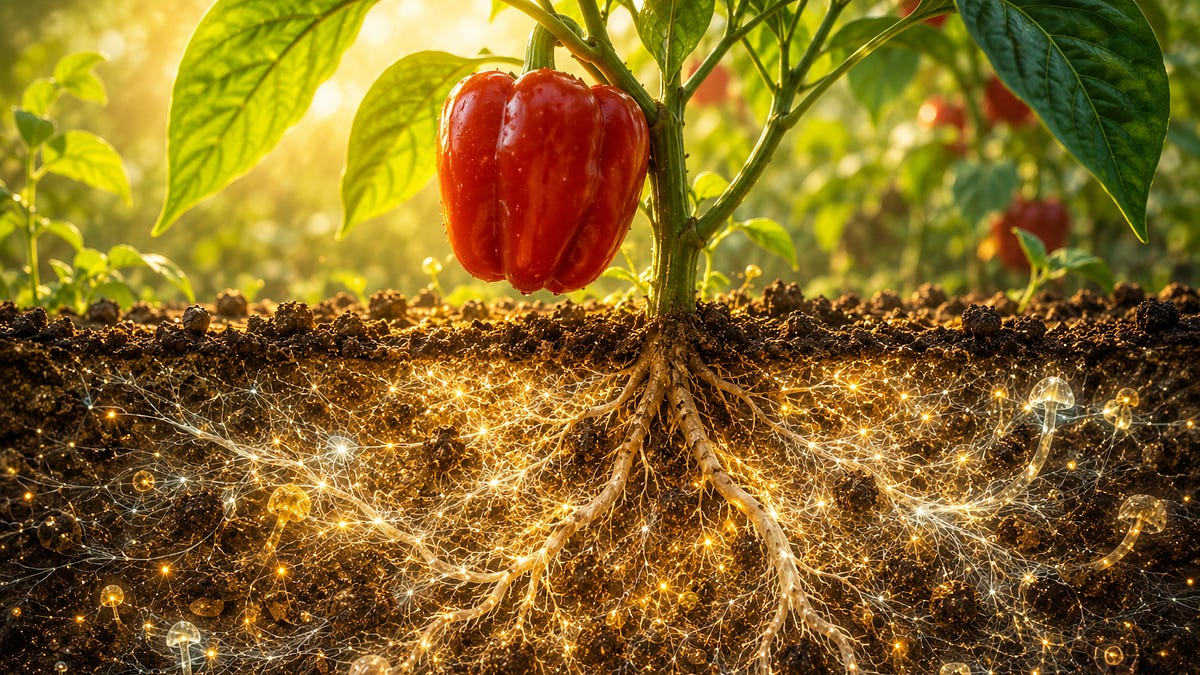
I've said it many times - You can't poison part of our microbiome, our environment, without it affecting US!
We are all connected!
"Surfactin. A cyclic lipopeptide and one of the most powerful biosurfactants known. Recent research has documented surfactin’s ability to enhance secretory IgA production, increase intestinal villus height, upregulate tight-junction proteins (claudin-1, occludin, ZO-1) that maintain gut barrier integrity, and reduce intestinal inflammation in models of induced colitis.¹³ Surfactin also has documented antiviral activity, including against enveloped viruses, and has been shown to inhibit the VEGF pathway involved in tumor angiogenesis — making it an emerging candidate in oncology research.¹⁴
Subtilisin and related proteases. Powerful protein-digesting enzymes that contribute to the breakdown of dietary proteins (including the difficult-to-digest gluten proteins of wheat) and to the catabolism of damaged proteins in tissues. B. subtilis proteases are part of the reason traditional fermented soy foods are more digestible than unfermented soy.
Bacteriocins and antimicrobial peptides. A broad arsenal of compounds — subtilin, mycosubtilin, fengycin, iturin, plipastatin — with documented activity against pathogenic bacteria (including methicillin-resistant Staphylococcus aureus), pathogenic fungi (including Candida albicans), and certain viruses.¹⁴ These compounds are part of how B. subtilis in our gut helps maintain the microbial balance that resists opportunistic infections.
Immune-modulating spore-coat proteins. Even before germination, B. subtilis spores interact with gut-associated lymphoid tissue (GALT), training the immune system, biasing it toward tolerance rather than reactivity, and contributing to the gut-immune axis that determines so much of our overall health.⁷
This is the supra-human principle in plain biochemistry. We could not, with our human genome alone, make these molecules. We borrow them — daily, ancestrally, through diet and exposure — from a microbial partner whose chemical capabilities vastly exceed our own."
https://sayerji.substack.com/p/how-bacillus-subtilis-is-quietly
We are all connected!
"Surfactin. A cyclic lipopeptide and one of the most powerful biosurfactants known. Recent research has documented surfactin’s ability to enhance secretory IgA production, increase intestinal villus height, upregulate tight-junction proteins (claudin-1, occludin, ZO-1) that maintain gut barrier integrity, and reduce intestinal inflammation in models of induced colitis.¹³ Surfactin also has documented antiviral activity, including against enveloped viruses, and has been shown to inhibit the VEGF pathway involved in tumor angiogenesis — making it an emerging candidate in oncology research.¹⁴
Subtilisin and related proteases. Powerful protein-digesting enzymes that contribute to the breakdown of dietary proteins (including the difficult-to-digest gluten proteins of wheat) and to the catabolism of damaged proteins in tissues. B. subtilis proteases are part of the reason traditional fermented soy foods are more digestible than unfermented soy.
Bacteriocins and antimicrobial peptides. A broad arsenal of compounds — subtilin, mycosubtilin, fengycin, iturin, plipastatin — with documented activity against pathogenic bacteria (including methicillin-resistant Staphylococcus aureus), pathogenic fungi (including Candida albicans), and certain viruses.¹⁴ These compounds are part of how B. subtilis in our gut helps maintain the microbial balance that resists opportunistic infections.
Immune-modulating spore-coat proteins. Even before germination, B. subtilis spores interact with gut-associated lymphoid tissue (GALT), training the immune system, biasing it toward tolerance rather than reactivity, and contributing to the gut-immune axis that determines so much of our overall health.⁷
This is the supra-human principle in plain biochemistry. We could not, with our human genome alone, make these molecules. We borrow them — daily, ancestrally, through diet and exposure — from a microbial partner whose chemical capabilities vastly exceed our own."
https://sayerji.substack.com/p/how-bacillus-subtilis-is-quietly
I've said it many times - You can't poison part of our microbiome, our environment, without it affecting US!
We are all connected!
"Surfactin. A cyclic lipopeptide and one of the most powerful biosurfactants known. Recent research has documented surfactin’s ability to enhance secretory IgA production, increase intestinal villus height, upregulate tight-junction proteins (claudin-1, occludin, ZO-1) that maintain gut barrier integrity, and reduce intestinal inflammation in models of induced colitis.¹³ Surfactin also has documented antiviral activity, including against enveloped viruses, and has been shown to inhibit the VEGF pathway involved in tumor angiogenesis — making it an emerging candidate in oncology research.¹⁴
Subtilisin and related proteases. Powerful protein-digesting enzymes that contribute to the breakdown of dietary proteins (including the difficult-to-digest gluten proteins of wheat) and to the catabolism of damaged proteins in tissues. B. subtilis proteases are part of the reason traditional fermented soy foods are more digestible than unfermented soy.
Bacteriocins and antimicrobial peptides. A broad arsenal of compounds — subtilin, mycosubtilin, fengycin, iturin, plipastatin — with documented activity against pathogenic bacteria (including methicillin-resistant Staphylococcus aureus), pathogenic fungi (including Candida albicans), and certain viruses.¹⁴ These compounds are part of how B. subtilis in our gut helps maintain the microbial balance that resists opportunistic infections.
Immune-modulating spore-coat proteins. Even before germination, B. subtilis spores interact with gut-associated lymphoid tissue (GALT), training the immune system, biasing it toward tolerance rather than reactivity, and contributing to the gut-immune axis that determines so much of our overall health.⁷
This is the supra-human principle in plain biochemistry. We could not, with our human genome alone, make these molecules. We borrow them — daily, ancestrally, through diet and exposure — from a microbial partner whose chemical capabilities vastly exceed our own."
https://sayerji.substack.com/p/how-bacillus-subtilis-is-quietly

 English
 Arabic
 French
 Portuguese
 Deutsch
 Turkish
 Dutch
Dutch
 Italiano
 Russian
 Romaian
 Portuguese (Brazil)
 Greek
Greek